Consumer trust · scam detection
CheckIfScam
One box. Any scam. An instant, plain-English verdict.
A trust-first scam detection platform that turns uncertainty into a clear answer in seconds.
- Client
- CheckIfScam.com
- Industry
- Consumer trust · scam detection
- Year
- 2025
- Role
- Founder · Product, UX, design system, content & SEO architecture
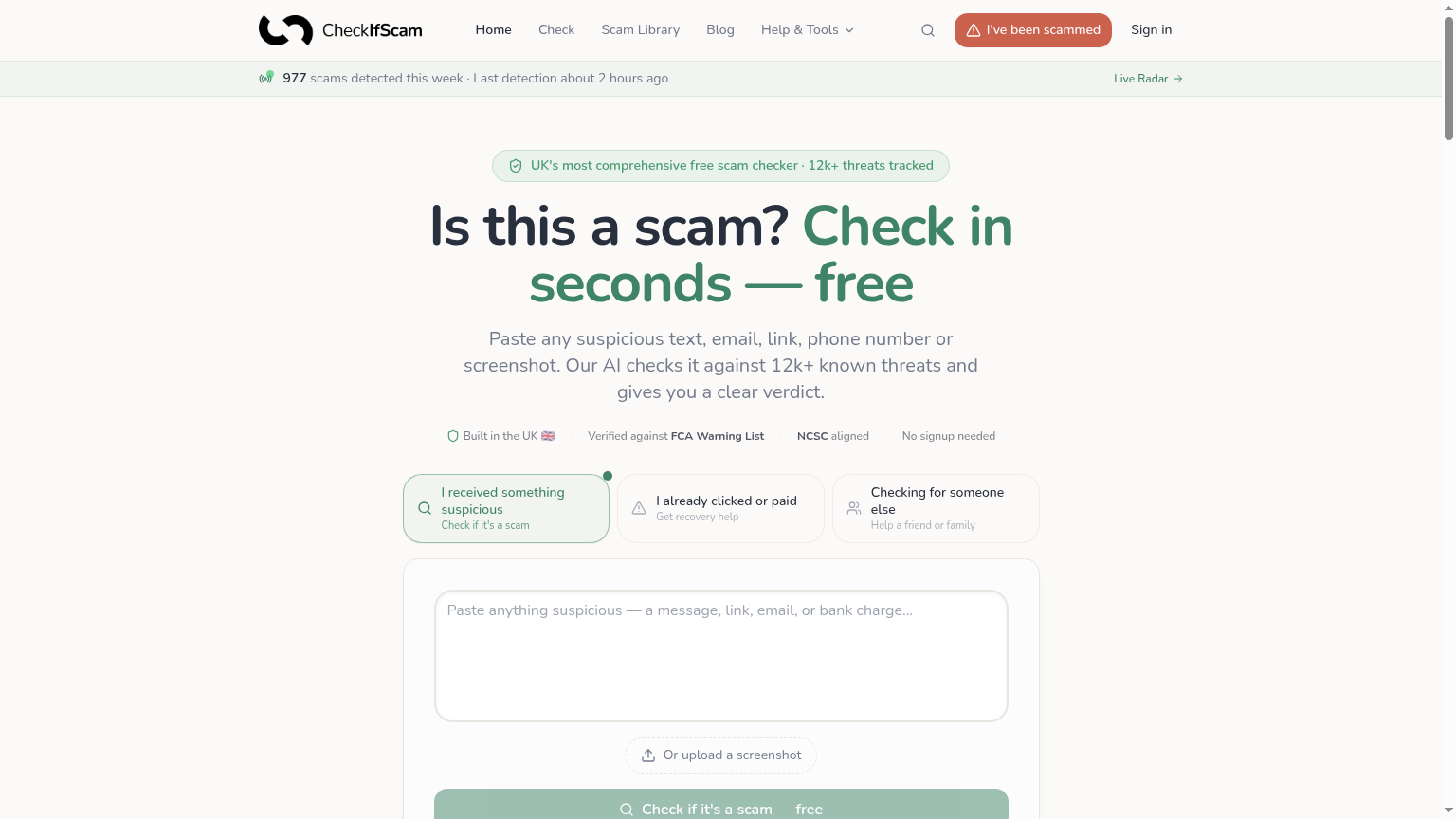
The core idea
One box. Any scam. An instant, plain-English verdict.
The product is shaped around a single moment: the second a user pastes something in. Everything else exists to give that verdict somewhere to lead.
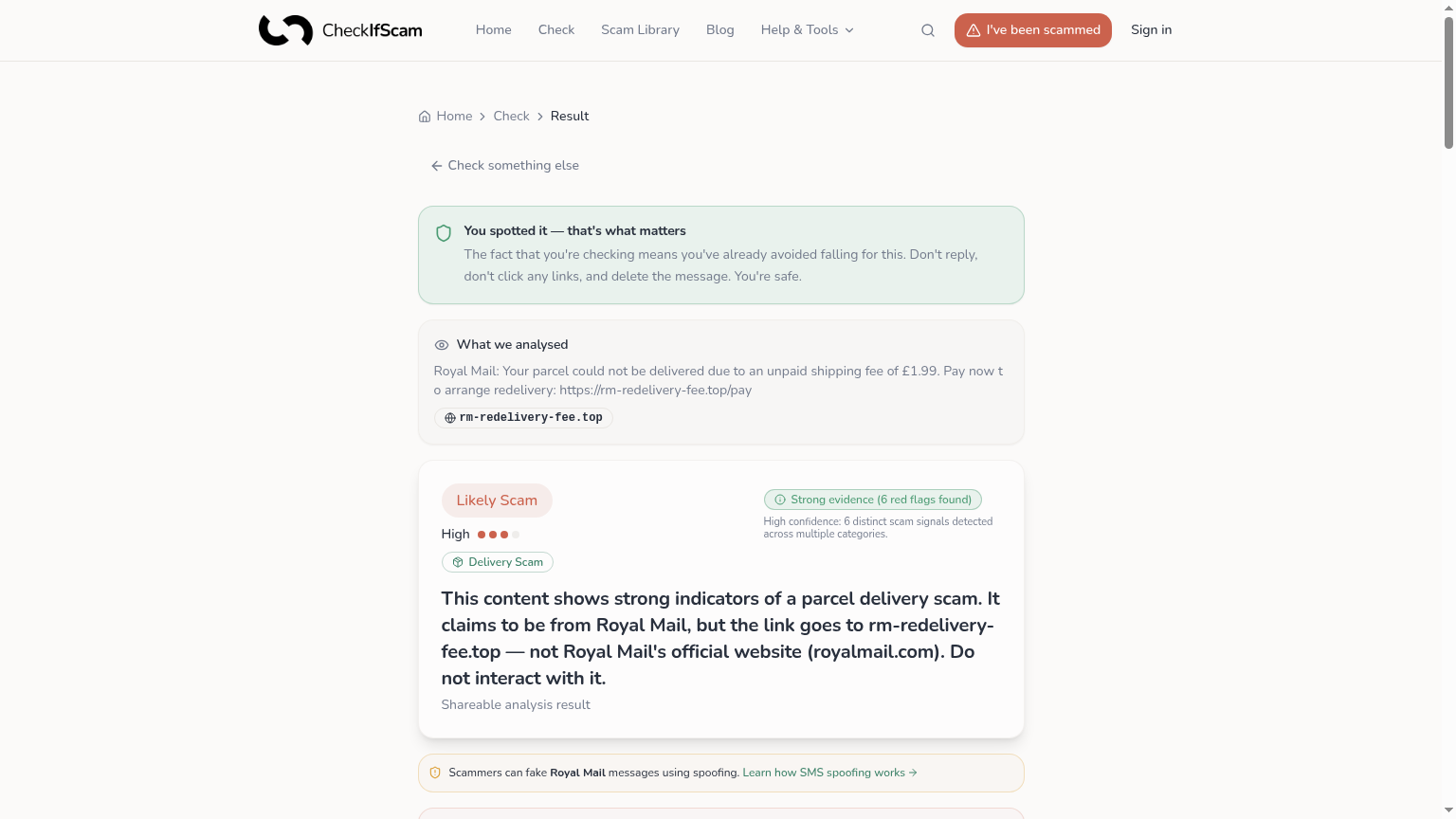
Verdict UX
The answer first. Then the why. Then the one thing to do next.
Platform scale
- 12,000+
- Threats tracked
- 5,415
- Scam messages indexed
- 3,755
- Flagged domains
- 2,386
- SEO landing pages
- 378
- Recovery guides
- 106
- UK brands verified
Overview
A consumer trust platform shaped around the second a suspicious message arrives. One input, a calm verdict, and — if it's already too late — somewhere to go next. Free, anonymous, UK-focused.
The problem
01
Scam tools were fragmented.
Existing tools each solved a slice of the problem — domain reputation here, screenshot analysis there, reporting after the fact. Nowhere could an anxious person paste almost anything suspicious and be told, clearly, what it was and what to do next.
The insight
02
Users don't want a tool. They want an answer.
In the seconds after a suspicious text arrives, no one needs more interface. They need somewhere measured and credible that hands back a verdict in plain English. The whole product is shaped around that emotional truth.
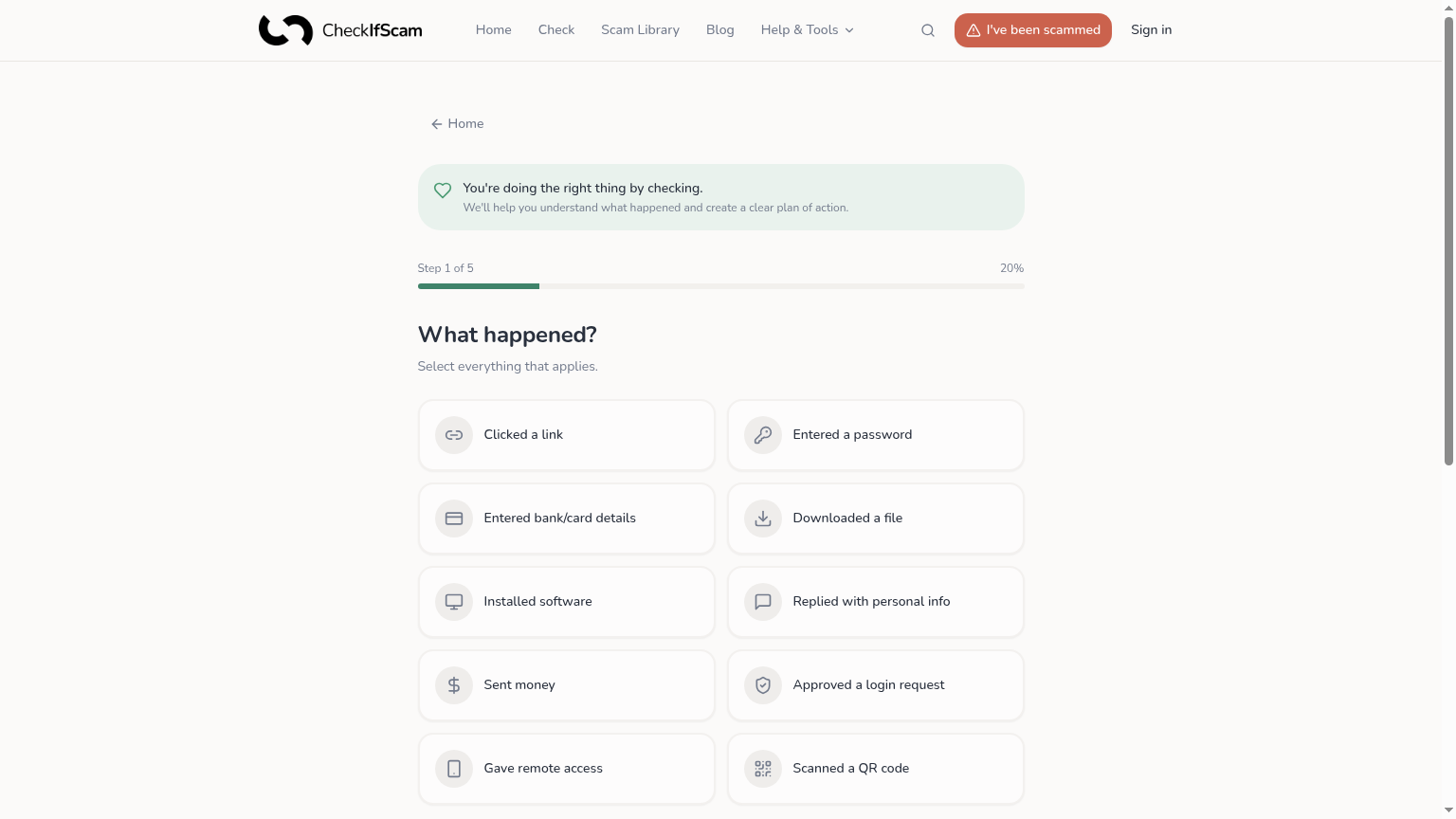
Panic Mode
A guided recovery journey for users who have already clicked or paid. One decision at a time. No blame.
The strategy
03
One input. A wider system behind it.
A universal input sits at the centre. Behind it, recovery guidance, brand verification, live intelligence and a structured scam library give the verdict somewhere to lead — and let the platform scale through depth, not surface pages.
The design
04
Calm, plain, quietly confident.
Sage green over alarm red. Editorial spacing over dashboard density. Confidence shown without theatre. Nothing in the interface raises the temperature; the whole point is to lower it.
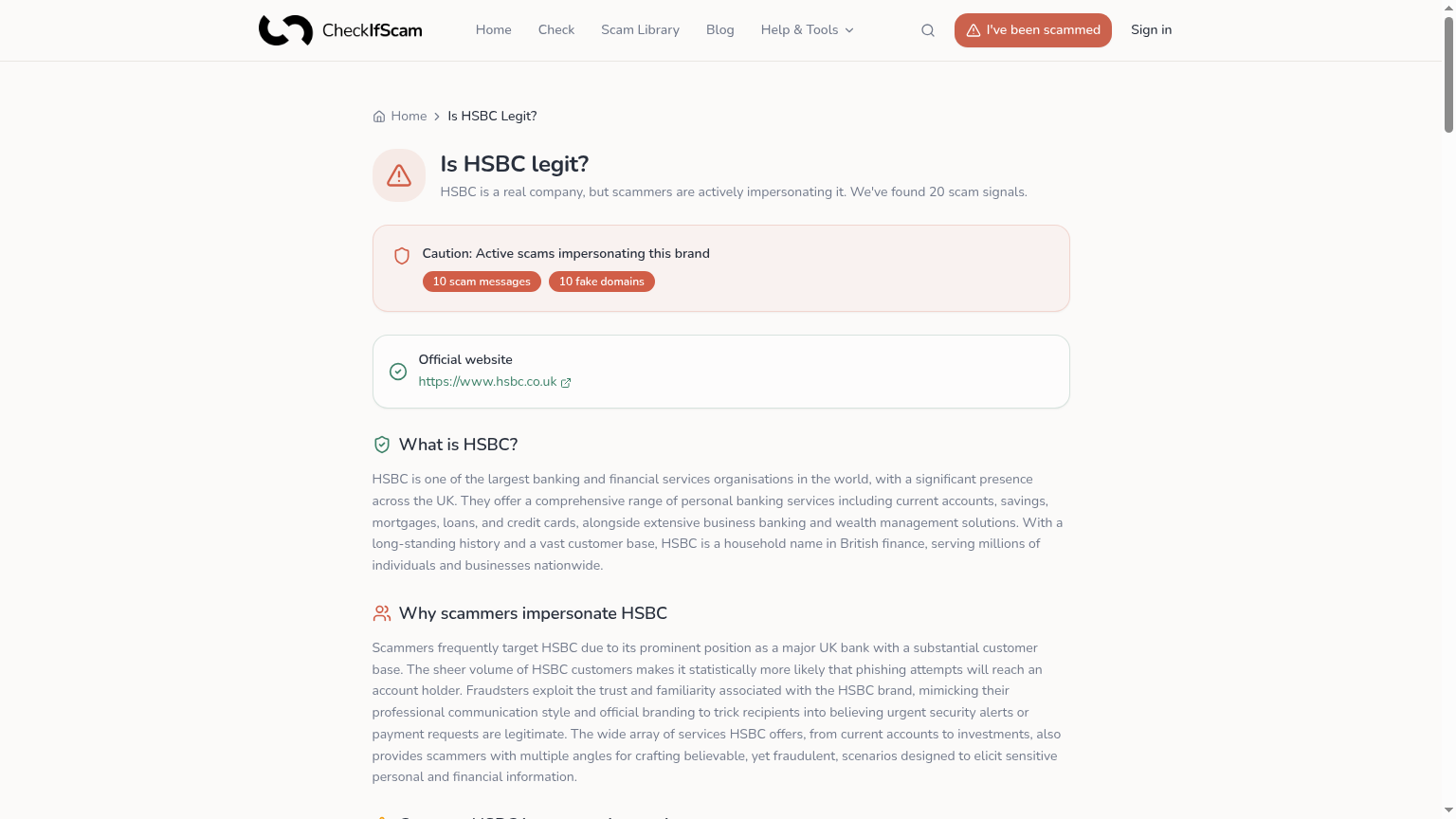
Brand register
Verified UK brand pages double as a public trust register — what's real, what scammers impersonate, how to tell.
The system
05
Built on a structured taxonomy.
A scam model — brand, channel, tactic, asset, stage, recovery — powers every surface, held to quality gates that reject thin or low-confidence pages by design.
The system
Six surfaces. One platform.
Each pillar is a self-contained product. Each one feeds the others.
01
Universal input
One field for text, links, numbers, charges, emails and screenshots — routed through a hybrid AI verdict pipeline.
02
Verdict UX
Plain English over threat-intel jargon. A clear answer, not a risk score.
03
Panic Mode
A five-step recovery journey for users who have already clicked or paid.
04
Brand register
A public register of verified UK brands — what they look like, what scammers impersonate, how to tell.
05
Live scam radar
Trending scams, flagged domains and emerging tactics, read from the platform's own signal in real time.
06
Structured library
A taxonomy of every scam pattern — the spine of the platform's discoverability.
Positioning
Held together where the category ships in pieces.
Most scam tools take on a single slice — a domain check, a screenshot scan, a report form. CheckIfScam carries the user from suspicion to verdict to recovery without ever handing them off.
On the phone
Built for the moment something arrives.
Most scams reach people on a phone, mid-task. The mobile experience is the product — sticky actions, recovery-first flows, and a verdict that fits a single thumb-scroll.
checkifscam.com
CheckIfScam
Is this a scam?
Paste anything suspicious — message, link, number, charge — get a clear answer.
Trusted by 12,000+ checks
The universal input — one field, every accepted format.
Result
⋯Likely scam
92% confidence
This message impersonates Royal Mail. The link does not match the official domain.
What to do next
- 01Don't tap the link.
- 02Forward the message to 7726.
- 03Delete it from your inbox.
The verdict — reassurance, evidence, a single next step.
In use
Across the surfaces.
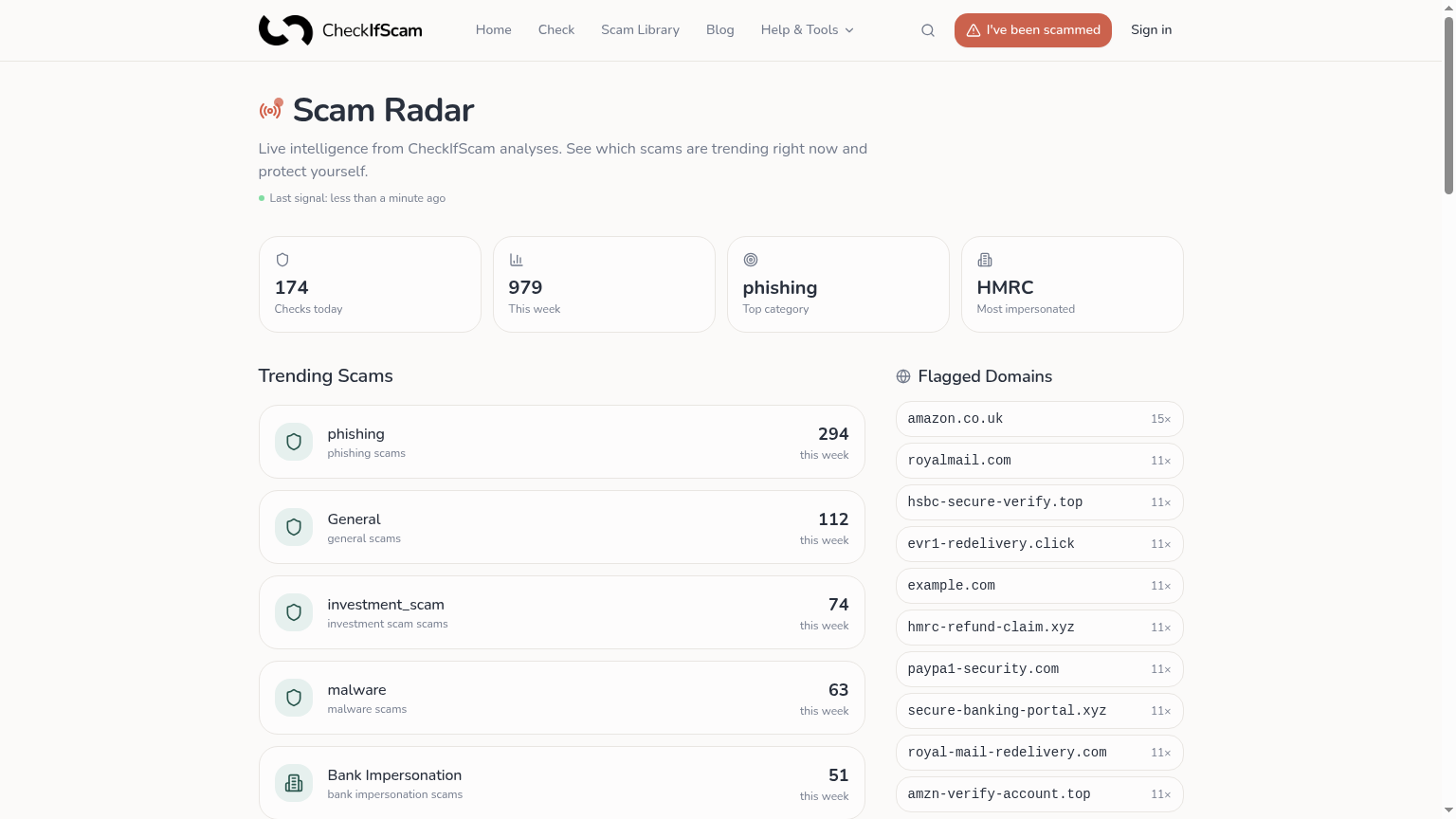
Live intelligence
Trending scams, flagged domains and emerging tactics — read from the platform's own signal in real time.
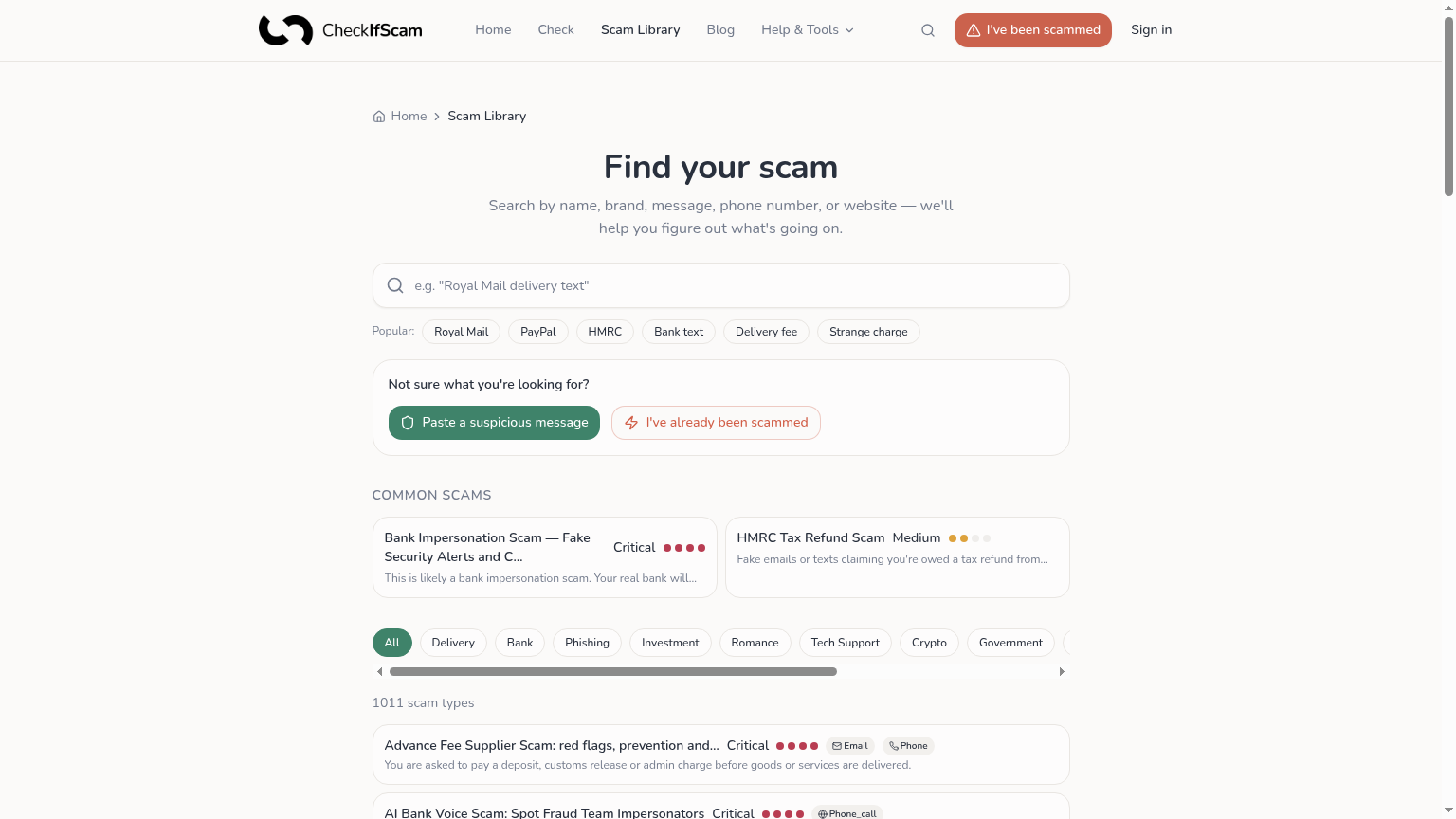
Scam library
A structured library indexed by category, brand and tactic — the spine of the platform's organic discoverability.
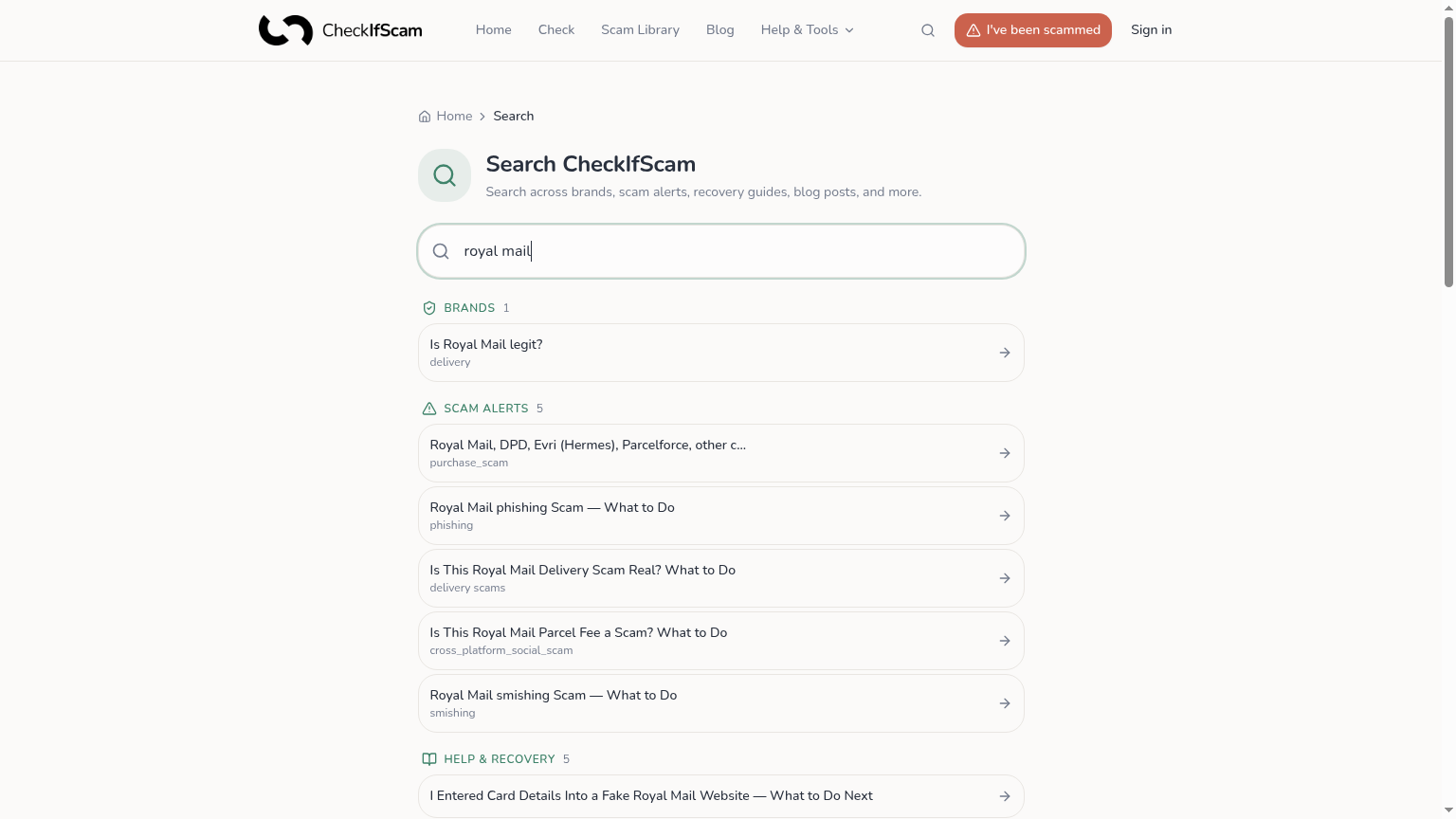
Global search
One search spans every surface. The user never has to know which part of the platform holds the answer.
Not another cyber tool. The calm friend you'd ring when something didn't feel right.
My role
Founder · Product, UX, design system, content & SEO architecture.
- 01Named, positioned and shaped CheckIfScam as a calm, UK-focused alternative to alarmist scam tools.
- 02Authored the universal-input thesis and the three-mode intent split: received, already clicked, checking for someone else.
- 03Designed the verdict-led UX — reassurance, then evidence, then a single next step.
- 04Built Panic Mode as a guided five-step recovery journey — mobile-first, no blame.
- 05Created the full design system: tokens, components, and bespoke verdict, risk and recovery patterns.
- 06Modelled the scam taxonomy spanning brand, channel, tactic, asset, stage and recovery.
- 07Architected a quality-gated programmatic SEO system that rejects thin pages by default.
- 08Set up the hybrid AI verdict pipeline with human-readable explanations and calibrated confidence.
In summary
Trust isn't signalled. It's built — into the pace of the interface, and the confidence of the answer that comes back.